
While Gladys West is not a household name, it should be. Her work helped to create something that almost every person uses daily: GPS. Born in 1930 and having grown up on a farm, West knew she wanted a different life than the farm could give her. She went on to get a scholarship to college from her high school, and majored in mathematics at Virginia State College. Her career led her to Naval Surface Warfare Center Dahlgren Division, where she would work on geospatial coordinate calculations. Without her calculations, GPS would have been virtually impossible to create.
Source: Khadjavi, Lily, Reza Malek-Madani, and Tanya Moore. “Navigating an Uncharted Path: The Life and Legacy of Dr. Gladys B. West.” Notices of the American Mathematical Society, n.d. https://www-ams-org.proxygw.wrlc.org/notices/202103/rnoti-p357.pdf.
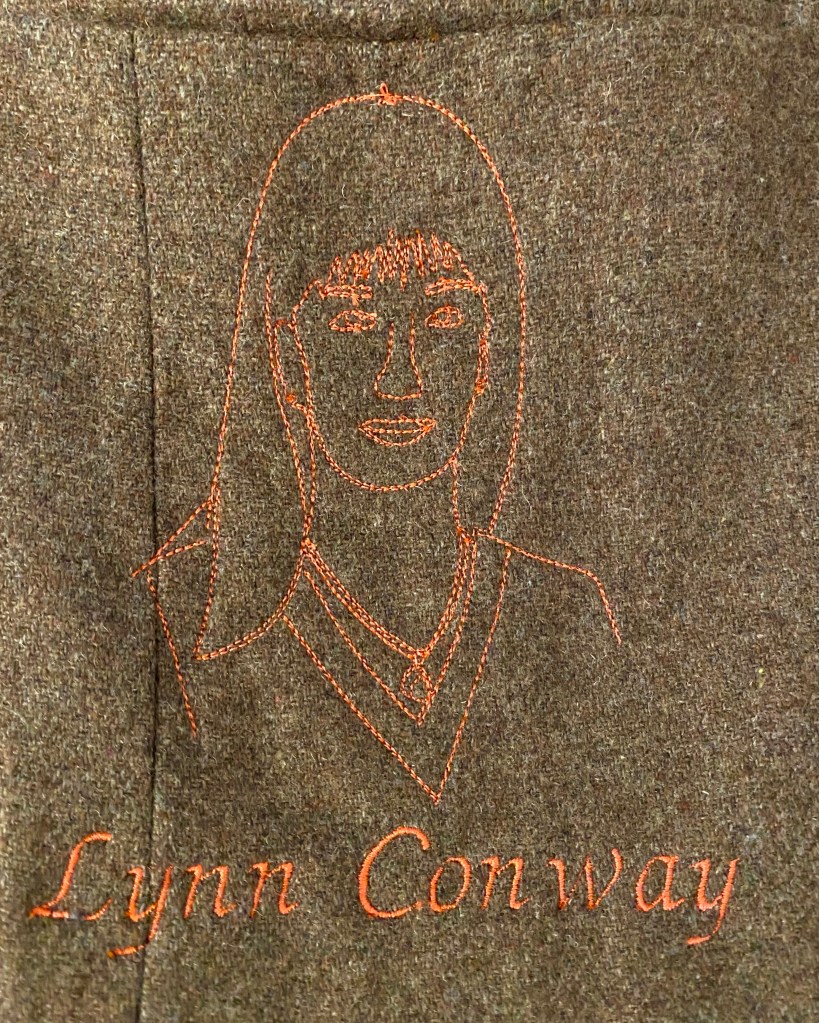
Lynn Conway started her career at IBM in the 1960s, but was fired unjustly due to her desire to receive gender-affirming surgery. After she completed her operation she began working at Memorex, then for Xerox, where she worked on consequential projects, such as a redesign of the computer chip, revolutionizing the computing field. At the latter end of her career, Lynn Conway became a college professor at the University of Michigan. In 2000, Lynn created a website discussing her story and her work, which is still up today. Here is the link below:
https://ai.eecs.umich.edu/people/conway/conway.html
Source: Page, Sydney. “In 1968, IBM Fired Lynn Conway for Being Transgender. She Finally Got an Apology.” The Lily. November 30, 2020. https://www.thelily.com/in-1968-ibm-fired-lynn-conway-for-being-transgender-she-finally-got-an-apology/?utm_medium=social&utm_campaign=wp_main&utm_source=twitter.

While Edie Windsor may be a well known LGBTQ+ icon, her first career was actually as a computer scientist with IBM! While she sadly passed away in 2017, her legacy lives on. At IBM she worked on mainframe computing and rose up the ranks to the highest position that a programmer could have at IBM. After she left the company in 1975, Windsor used her tech knowledge to help make LGBTQ organizations more tech literate.
Source: “Remembering Edie Windsor: Tech Pioneer, Equality Advocate.” AnitaB.org, August 25, 2020. https://anitab.org/profile/remembering-edie-windsor-tech-pioneer-equality-advocate/.
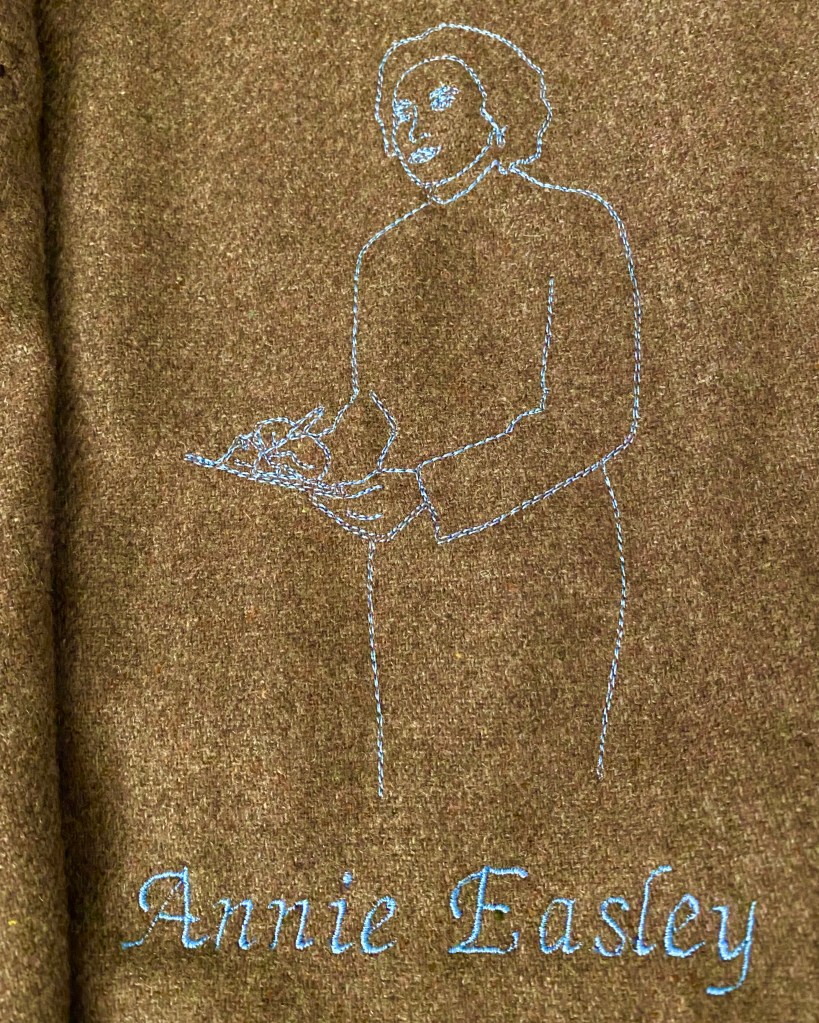
Growing up, Annie Easley had never heard of NACA, the precursor of NASA. That is, until an article about two twin sisters working as computers landed in her newspaper. She started working at NACA in 1955, and continued to work there for 34 years as a computer, programmer, and Equal Opportunity Advocate. An advocate for diversity in hiring practices at NASA, she helped make NASA a more inclusive place to work, as well as working on several different teams and projects as a computer programmer.
Source: Johnson, Sandra, and Annie Easley. NASA Headquarters Oral History Project . Other. NASA, n.d. https://historycollection.jsc.nasa.gov/JSCHistoryPortal/history/oral_histories/NASA_HQ/Herstory/EasleyAJ/EasleyAJ_8-21-01.htm.
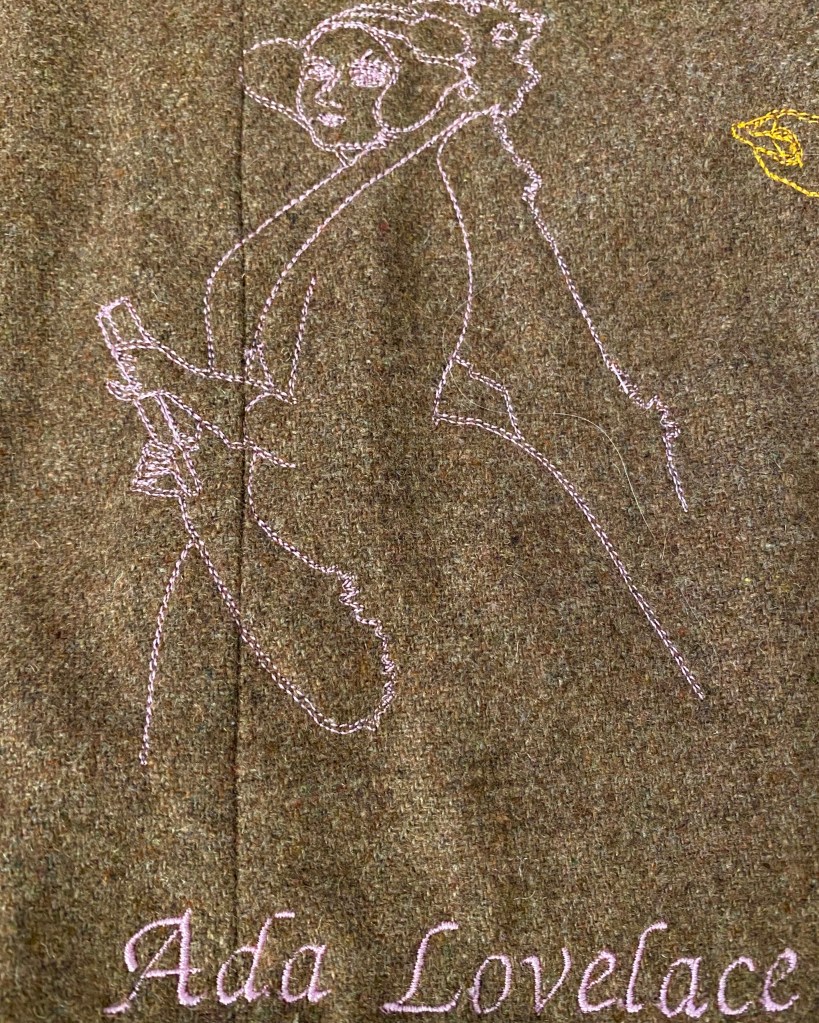
Ada Lovelace is actually widely considered to be the world’s first programmer. Her work with Charles Babbage’s analytical engine was transformational for the world of computation. Lovelace’s notes on how the machine could work the is considered to be the first program!
Hilfrank, Elizabeth. “Ada Lovelace.” History. National Geographic Kids, March 17, 2022. https://kids.nationalgeographic.com/history/article/ada-lovelace.
This is just a fraction of the women I wanted to feature in this project. I would like to continue this work post grad in my free time if possible.
 Women's Work